Alwar City Guide Pro
About Alwar
District overview, climate, languages, economy and living culture.
Image source: Wikimedia Commons · verify individual licence before commercial reuse
About Alwar
District overview, climate, languages, economy and living culture.
What to know
Alwar sits in northeast Rajasthan and blends Aravalli hills, old-city heritage, local markets, education, and a growing service economy.
Best for
Tourists, residents, students and local businesses who want a practical city overview.
Executive Summary: Nestled among the rugged valleys of the Aravalli Hills, Alwar serves as the eastern gateway to Rajasthan. Often referred to as Matsya Desh in ancient Hindu epics, this historic city seamlessly bridges ancient mythology, royal Rajput splendor, and rich wildlife ecosystems. From the towering stone heights of Bala Quila and the architectural elegance of the City Palace to the serene waters of Siliserh Lake and the roaring tigers of Sariska, Alwar offers a multi-faceted journey through time.
Alwar is recognized as one of Rajasthan's oldest and most historically layered kingdoms. Local folklore suggests that the region dates back to the Mahabharata era, when the Pandavas spent a portion of their exile hiding within its dense forests and rocky terrain. Today, the city is broadly split into two distinct worlds: Old Alwar, which is characterized by bustling traditional bazaars, narrow maze-like streets, and old Havelis, and New Alwar, featuring modern public spaces, sprawling parks, and wide avenues.
Architectural Marvels and Royal Heritage
The royal lineage of Alwar left behind an astonishing collection of architectural marvels that reflect a unique synthesis of Rajput valor and Islamic design elements.
- Alwar City Palace (Vinay Vilas Mahal): Erected in 1793 AD by Maharaja Bakhtawar Singh, this grand palace complex showcases an incredible mix of Rajput and Mughal styles. Its central courtyard features graceful marble pavilions sitting on stylized lotus-flower bases. The upper floors house a rich government museum displaying a rare collection of royal armory, miniature Ragamala paintings, and historical manuscripts detailing Mughal history.
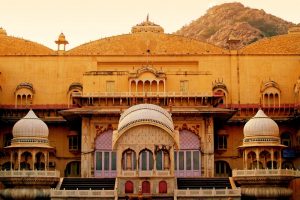
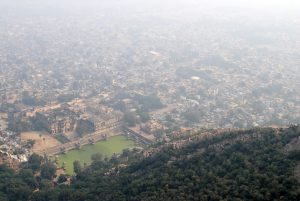
- Bala Quila (Alwar Fort): Perched dramatically on a steep 300-meter cliff within the Aravalli range, this massive 10th-century fortification towers directly above the city. Known locally as the "Young Fort," it features six historic entry gates—Jai Pol, Suraj Pol, Laxman Pol, Chand Pol, Kishan Pol, and Andheri Gate—alongside robust watchtowers providing sweeping bird's-eye views.

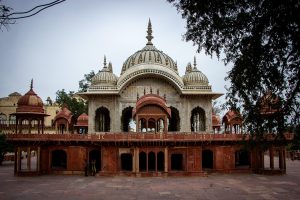
- Moosi Maharani ki Chhatri: Located right next to the City Palace tank (Sagar), this stunning double-storey cenotaph was built in 1815. It features a lower pillared floor constructed from rich red sandstone and an upper marble pavilion adorned with delicately carved domed arches, floral frescoes, and mythological ceiling paintings.


Nature, Lakes, and Wildlife Sanctuaries
Beyond its concrete forts and royal cenotaphs, Alwar is heavily defined by nature. Situated roughly 30 kilometers from the main urban center lies the world-renowned Sariska Tiger Reserve. Spanning over 800 square kilometers of dry deciduous forests, rocky landscapes, and grasslands, Sariska is a vital sanctuary for the Royal Bengal tiger, leopards, striped hyenas, and hundreds of native bird species. Additionally, visitors frequently travel to the peaceful banks of Siliserh Lake, a sprawling 19th-century reservoir framed by rolling hills that serves as a popular spot for boating and quiet retreats.
Visual Highlights of Alwar


Symmetrical arches of the royal cenotaph.
Aaradhyas 13 (CC BY-SA 4.0)
Conclusion
Alwar is a destination that rewards slow, deliberate travel. Whether you are a history buff fascinated by medieval architecture, a wildlife photographer looking to track tigers in Sariska, or a weekend traveler escaping city life, Alwar offers an ideal mix of culture, adventure, and raw natural beauty. Pack your bags and get ready to experience the timeless charm of Rajasthan's eastern frontier!
Alwar is a practical base for understanding northeast Rajasthan: the Aravalli hills shape the landscape, the old city carries layers of royal history, and markets, schools, hospitals and small businesses keep the district connected. A good first visit balances one heritage stop, one outdoor stop and time for local food and everyday city life.
Use this page as a working guide rather than a static checklist. Begin with the overview, then open the related pages from the header, sidebar and links below. Alwar rewards visitors who leave room for context: a fort is connected to the landscape around it, a market is connected to the food and people who use it, and a lake or forest route is connected to season, weather and access. Check current timings, entry rules, road conditions and local advice before departure. Keep a small buffer in the itinerary, carry water for outdoor stops and choose comfortable footwear for uneven ground. If you are travelling with family, older visitors or children, group nearby attractions and plan a quieter break between them. Residents and students can use the same directory to find education, healthcare, transport, civic and business information in one place.
Responsible travel protects the city’s character. Follow instructions at monuments, temples, markets and wildlife areas; do not climb fragile structures, feed animals or disturb rituals. Ask before photographing people, credit images and respect licence terms when sharing material online. Listings on a city guide can change as businesses move, services update and authorities revise access, so confirm important details directly before paying, booking or travelling. The most useful Alwar visit is not necessarily the longest one. A focused route with time to observe, eat locally and speak with people often creates a stronger memory than a rushed list of every stop. Use the contact page to suggest corrections and help keep this guide accurate for tourists, residents, businesses and students.
Reference: For destination context and current tourism notices, consult Rajasthan Tourism’s Alwar guide and the official Sariska information.
Plan with confidence
Use this guide alongside the related pages below to compare places, understand local context and build a practical Alwar itinerary. Timings, fees and availability can change, so confirm details locally before travelling.